

Why Auto Parts Retailers Need a Mobile App in 2026
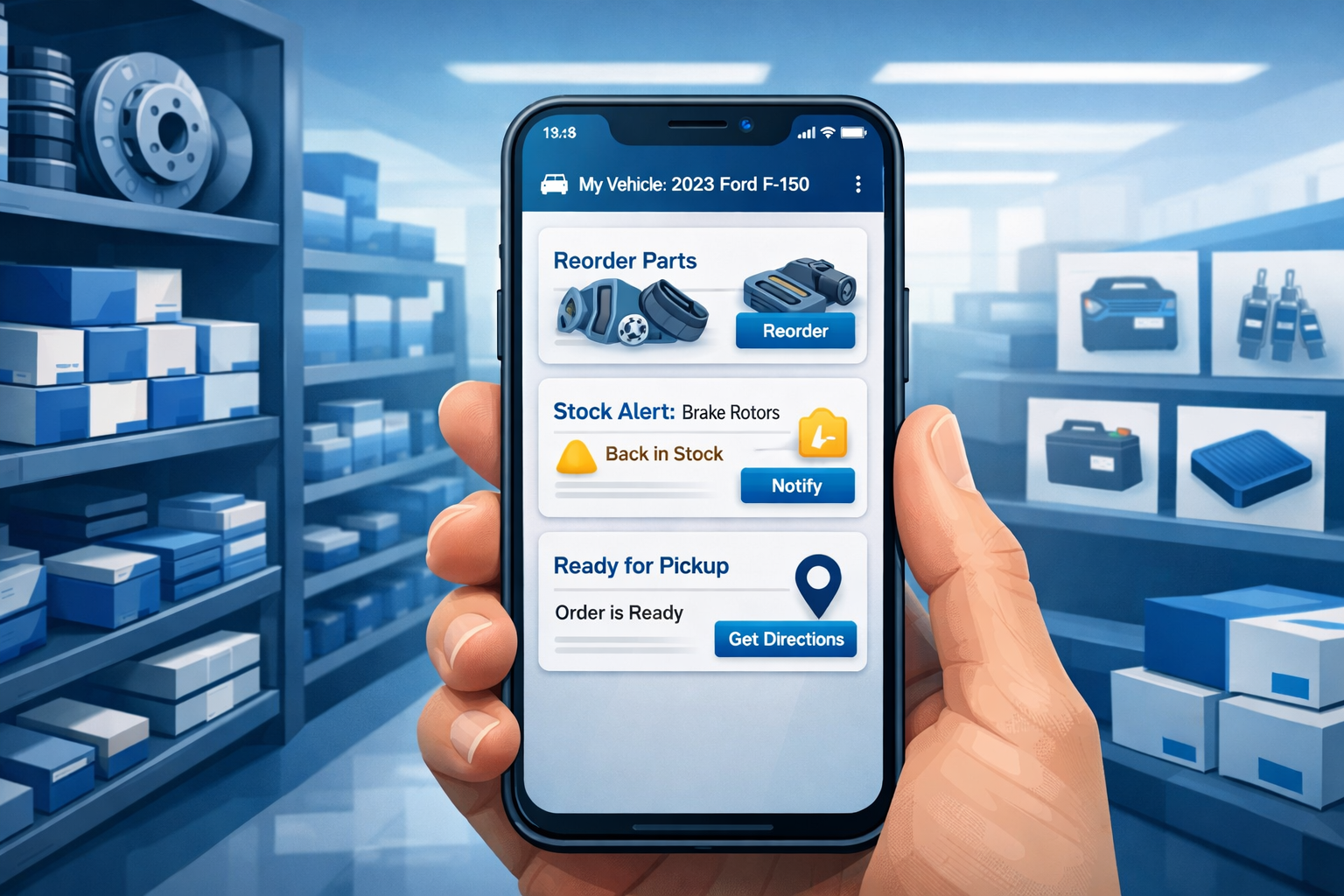
Auto parts retailers can increase repeat purchases, improve fitment confidence, and reduce support load with a mobile app strategy in 2026.
Inside this article
- The short answer
- Why websites alone create too much friction
- What improves when the experience becomes an app
- Mobile app vs mobile website for auto parts retail
- Where the revenue lift usually comes from
- Why timing matters in 2026
- A practical path: web-to-app instead of rebuilding everything
- Questions buyers often ask
- Final takeaway
The short answer
Auto parts retailers need a mobile app in 2026 because repeat orders, fitment confidence, service timing, and customer retention all work better in a direct mobile channel.
A website can help a customer buy once.
A mobile app is better at helping them buy again with less friction.
That matters in auto parts because the business is not only about first-time discovery. It is about getting the next oil filter order, the next brake pad replacement, the next accessory upgrade, and the next pickup visit.
Why websites alone create too much friction
Most auto parts retailers already have a website.
It may include:
- product search
- category pages
- fitment filters
- store locations
- delivery options
- customer accounts
That is useful, but mobile web still creates friction in the moments that matter most.
Auto parts shopping has more anxiety than standard ecommerce
Customers are not only asking whether the product looks good or whether the price is fair.
They are also asking:
- Will this fit my vehicle?
- Is this the same part I bought last time?
- Can I pick it up today?
- How fast can I reorder?
- What happens if I need warranty support?
When those questions are hard to answer quickly, conversion drops and support load rises.
Browser behavior is weak for repeat purchases
Many auto parts purchases are recurring or pattern-based:
- engine oil
- air filters
- cabin filters
- brake components
- wiper blades
- batteries
- cleaning products
- accessories
Yet on mobile web, customers often have to start over every time. They search again, re-enter vehicle details again, and compare again.
That slows down action.
What improves when the experience becomes an app
Saved vehicle profiles remove fitment friction
Fitment is one of the biggest reasons customers hesitate when buying parts online.
In a mobile app, customers can save:
- make
- model
- year
- trim
- engine details
Once that profile exists, the shopping experience becomes much simpler. Relevant products can surface faster, incompatible products can be reduced, and customers feel more confident about completing the order.
That can help reduce:
- abandoned sessions
- wrong-item orders
- return requests
- fitment-related support questions
Reordering becomes much easier
For many auto parts retailers, repeat purchasing is one of the biggest profit levers.
If someone already bought the correct oil filter, brake fluid, or accessory once, they should not have to search from zero next time.
An app can make repeat behavior easier with:
- order history
- one-tap reorder
- saved favorites
- reorder reminders
- recently viewed items
That matters because convenience is often what determines whether a customer returns to your brand or buys from a marketplace instead.
Push notifications support real buying moments
Good push notifications are not random promotions.
For auto parts retail, useful messages may include:
- your last oil change product may be due again
- the battery you viewed is back in stock
- your pickup order is ready
- your saved part is now discounted
- your local store has the item available today
These messages feel practical, not noisy, because they are tied to a real customer need.
Order tracking and status updates lower support load
Support teams in auto parts ecommerce often deal with repeat questions like:
- Where is my order?
- Has my pickup been prepared?
- Was my return approved?
- When will my refund arrive?
An app gives customers a simpler place to check answers on their own.
That can reduce avoidable tickets while improving the customer experience at the same time.
Local pickup works better inside an app
Many auto parts retailers operate across multiple locations or combine ecommerce with local inventory.
In that model, speed matters.
Customers often want:
- same-day pickup
- nearby availability
- branch-specific inventory
- fast order status updates
A mobile app can make these actions easier to access than a browser flow, especially for returning customers who already know what they need.
Mobile app vs mobile website for auto parts retail
| Area | Mobile website | Mobile app |
|---|---|---|
| Vehicle fitment | Often re-entered | Can be saved and reused |
| Repeat orders | More searching | Faster reorder flow |
| Order updates | Mostly passive | Push plus in-app tracking |
| Pickup convenience | Functional but slower | Faster access for returning users |
| Loyalty visibility | Easy to miss | Easier to revisit |
| Customer retention | Weak | Stronger direct channel |
| Brand trust | Website-level | App Store and home screen presence |
The difference is not only about design.
It changes how often customers come back and how easily they act when they do.
Where the revenue lift usually comes from
Auto parts retailers do not always need more traffic first.
Often, they need better conversion from the customers they already have.
Repeat-purchase categories
Products with natural reorder cycles are strong app candidates:
- oil and fluids
- filters
- wipers
- cleaning and detailing items
- maintenance kits
An app can make these purchases feel routine instead of effort-heavy.
Accessory upsells
Auto accessories and add-ons often perform better when the customer journey feels personalized and easy to revisit.
Relevant examples include:
- lighting upgrades
- phone mounts
- seat organizers
- car care products
- seasonal accessories
An app makes it easier to surface these products based on browsing and purchase history.
Warranty and purchase-history trust
Customers often forget what they bought and when they bought it.
That creates friction when they want to:
- reorder the same part
- check eligibility
- review warranty timing
- reference a previous purchase
A mobile app can centralize this history in a cleaner way, which improves trust and reduces confusion.
Why timing matters in 2026
Auto parts retail is increasingly shaped by:
- higher acquisition costs
- stronger marketplace competition
- thinner margins
- rising customer expectations on mobile
That means retention and direct access matter more than before.
If a competitor launches a better mobile experience first, they do not only gain a nicer interface.
They gain:
- more repeat visits
- better first-party behavioral data
- more direct communication through push
- a stronger habit loop
Over time, that becomes harder to catch up with.
A practical path: web-to-app instead of rebuilding everything
Many retail teams assume a mobile app means a large custom project.
That assumption delays action.
If your brand already has a working website, catalog, account flow, or pickup logic, you may not need to rebuild everything from scratch.
A web-to-app approach can be the more practical move because it lets you:
- launch faster
- keep your existing backend
- preserve your current commerce logic
- add mobile-specific value like push notifications and home screen presence
For many auto parts retailers, that is the fastest path to a stronger mobile channel.
Questions buyers often ask
Do auto parts retailers really need an app if the website already works?
If the website only handles first-time discovery, it may be enough.
If the business depends on repeat orders, fitment confidence, pickup convenience, and retention, an app usually adds meaningful value.
Will an app reduce returns and support tickets?
It can help, especially when saved vehicle profiles, clearer order visibility, and better self-service reduce common customer mistakes and questions.
Is this only useful for large chains?
No. Mid-sized and growing retailers often feel the benefit faster because retention improvements show up quickly in revenue and support efficiency.
Do we need a fully custom native build?
Not always. If your current website already handles core shopping flows, a web-to-app model may be the faster and more cost-effective option.
What features matter most first?
In most cases, start with:
- saved vehicle details
- faster reorder access
- push notifications
- account convenience
- order tracking
- pickup visibility
Final takeaway
Auto parts retail is a repeat-behavior business hiding inside an ecommerce category.
Customers come back when the experience feels fast, confident, and convenient. They leave when the process feels repetitive, uncertain, or fragmented.
A mobile app helps solve that by making fitment easier, reordering faster, communication more direct, and retention more reliable.
If your auto parts retail brand already has a website and you want to turn it into a stronger mobile growth channel without rebuilding everything from zero, Webvify can help: https://webvify.app