

Mobile App vs. Responsive Website: Why You Need Both in 2026
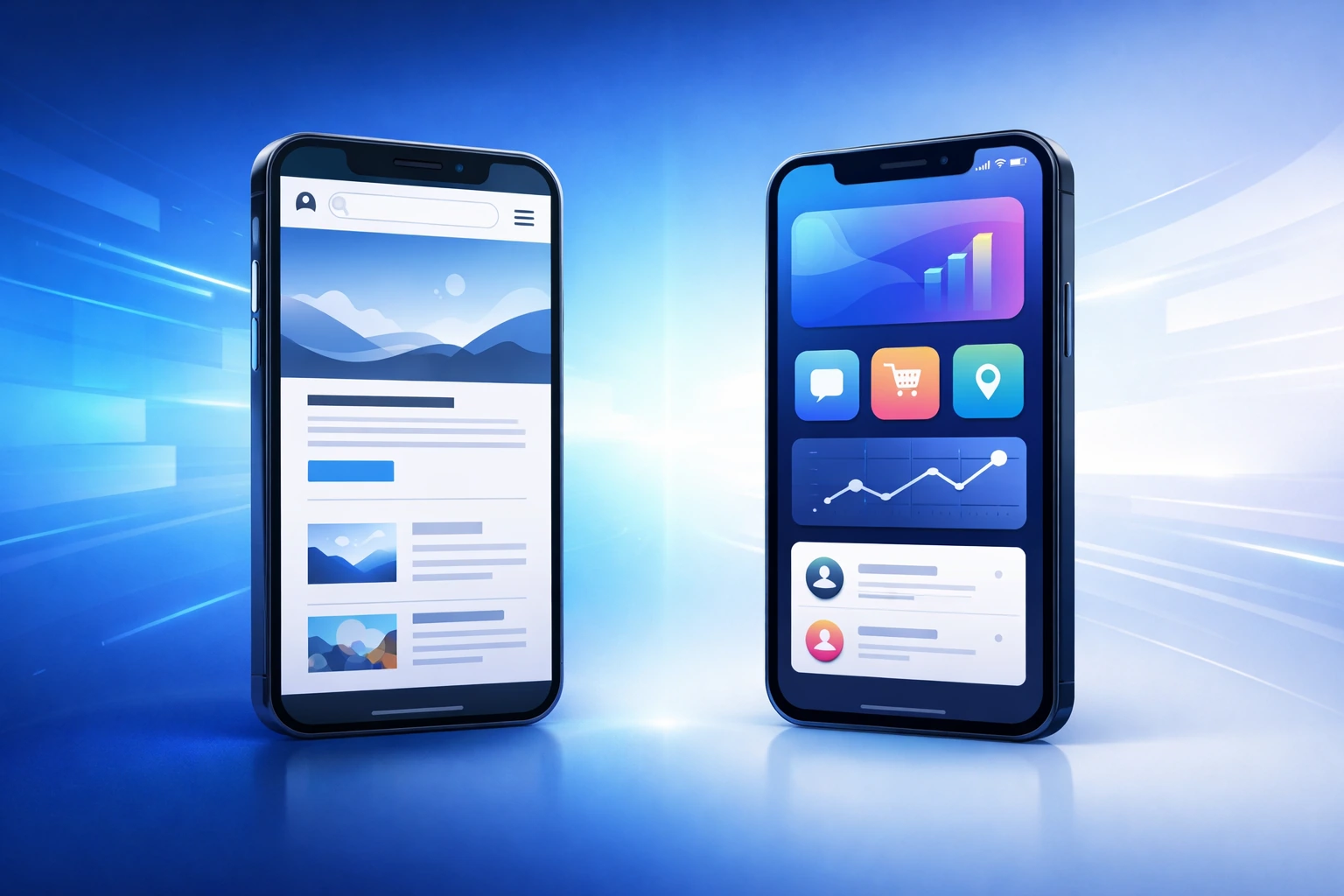
In 2026, choosing between a website and an app is a false dilemma. Learn why the most successful brands use both to maximize acquisition and retention.
Inside this article
- The False Choice: Website or App?
- The Role of a Responsive Website: Acquisition Engine
- The Role of a Mobile App: Retention Engine
- Web vs. App: User Behavior Comparison
- The Real Strategy: Build a Growth Loop
- The Cost Problem (And Why It No Longer Exists)
- WebView: The Bridge Between Web and App
- Why This Matters Now
- From Traffic to Loyalty: The Winning Model
- Final Takeaway
- Turn Your Website Into a High-Performing App
The False Choice: Website or App?
For years, businesses have debated whether to invest in a responsive website or a mobile app. In 2026, this is no longer a valid question.
The real winners are not choosing one over the other—they are combining both strategically.
A responsive website drives traffic and discovery, while a mobile app drives retention and lifetime value (LTV). Treating them as competitors limits growth. Treating them as a system unlocks scale.
The Role of a Responsive Website: Acquisition Engine
Your website is still your most powerful acquisition channel.
It is:
- Searchable via Google and SEO
- Shareable through links and ads
- Accessible instantly without installation
- Optimized for first-time user discovery
When users click on ads, search results, or social links, they land on your website—not your app.
This makes your website the top of your funnel.
Why It Still Matters in 2026
Despite the growth of mobile apps, web traffic continues to dominate discovery. A strong responsive site ensures:
- Fast onboarding for new users
- Lower friction in first interaction
- Broad reach across devices
But there is a limit.
Websites struggle with retention. Users leave, forget, and rarely return without external triggers.
The Role of a Mobile App: Retention Engine
Mobile apps excel where websites fail: keeping users engaged.
An app lives on the user’s device. That alone changes behavior.
With an app, you get:
- Push notifications (direct re-engagement)
- Faster load times and smoother UX
- Persistent login sessions
- Home screen presence (constant visibility)
This transforms casual visitors into repeat users.
Why Apps Drive Higher LTV
Users who install your app are:
- More likely to return frequently
- More likely to convert
- More likely to engage with your brand long-term
In short, apps turn traffic into loyal customers.
Web vs. App: User Behavior Comparison
| Factor | Responsive Website | Mobile App |
|---|---|---|
| Discovery | High (SEO, ads, social) | Low (requires install) |
| Access Speed | Medium (browser-dependent) | High (optimized environment) |
| User Retention | Low | High |
| Engagement Frequency | Occasional | Frequent |
| Push Notifications | Limited / browser-based | Native and highly effective |
| Conversion Rate | Moderate | High |
| Offline Access | No | Partial / supported |
| Brand Visibility | Temporary | Persistent (home screen presence) |
The pattern is clear:
- Websites bring users in
- Apps keep users coming back
The Real Strategy: Build a Growth Loop
The most effective digital strategy in 2026 is a loop:
- Acquire users via your website (SEO, ads, content)
- Convert them into app installs
- Retain them through app engagement
- Drive repeat purchases and interactions
- Re-engage via push notifications
This creates a self-reinforcing system where:
- Your website feeds your app
- Your app increases your overall revenue per user
The Cost Problem (And Why It No Longer Exists)
Historically, building both a website and a mobile app meant:
- Two separate codebases
- Two development teams
- Higher maintenance costs
This made apps feel like a luxury.
That’s no longer the case.
WebView: The Bridge Between Web and App
WebView technology changes the equation.
Instead of building a mobile app from scratch, WebView allows you to:
- Wrap your existing website into a mobile app
- Maintain a single codebase
- Sync updates instantly across web and app
What This Means for Businesses
You get:
- Faster time to market
- Lower development costs
- Consistent user experience across platforms
- The benefits of native app features (like push notifications)
Without rebuilding everything.
Why This Matters Now
User expectations have shifted.
In 2026:
- Users discover via web
- Users engage via apps
- Users expect seamless transitions between both
If you only have a website, you lose retention. If you only have an app, you lose discovery.
You need both.
From Traffic to Loyalty: The Winning Model
Think of your digital presence like this:
- Website = Entry point
- App = Relationship layer
The website captures attention. The app builds habit.
Together, they maximize:
- Conversion rates
- Customer lifetime value
- Brand loyalty
Final Takeaway
This is not a competition between web and app.
It is a collaboration.
Businesses that understand this shift are:
- Acquiring users more efficiently
- Retaining them longer
- Monetizing them better
The gap between web and mobile is no longer a technical problem—it’s a strategic opportunity.
Turn Your Website Into a High-Performing App
If you already have a website, you are halfway there.
With Webvify, you can transform your existing site into a fully functional mobile app—without rebuilding from scratch.
Launch faster, retain more users, and unlock new revenue streams.